 Historia y Personajes



History of Venezuela: First Part
1. Before the Discovery - 1498
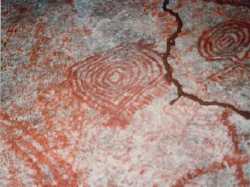
The first Venezuelans are traced back to 6,000 to 13,000 BC. These originals settlers proceeded from three different directions, East (today Guyanas), South (today Brazil) and North (today Antillas).
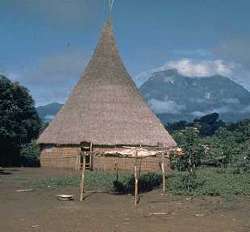
Typical aboriginal house from the South of Venezuela
Their different cultural and religious background gave birth to a diversity of tribes. Some were farmers, hunters and fishers, others developed a more complex agricultural system, such was the case of the Andean region; another group the Caribbean, who were highly aggressive and combative went into sailing activities. They developed different housing systems to suit their necessities according to climate and ways of life.
From these ancient Venezuelans we inherited a precious legacy which is still alive in our present culture, people and places names such as Tibisay, Tisbeth, Charaima, Caracas, Los Teques, etc. foods like arepa, hallaca, aji, casabe, and many more. There is no self respecting Venezuelan who does not dream of a "Caney" in his backyard.
2. The Discovery - 1498
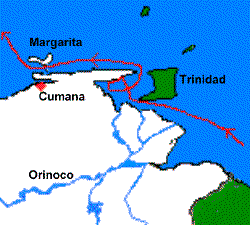
Totally unaware of the magnitude of the event, Christopher Columbus and his Spanish crew actually stepped on continental land for the first time on August 2nd 1498 at the mouth of the Orinoco River, (today Venezuelan territory); in fact he believed he had arrived to the Asian Coast. Columbus two previous trips had been to the Caribbean islands of Santo Domingo and Puerto Rico.
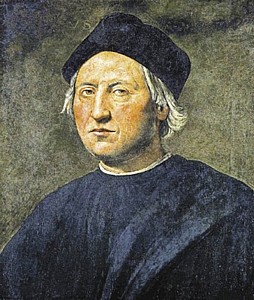
Christopher Columbus
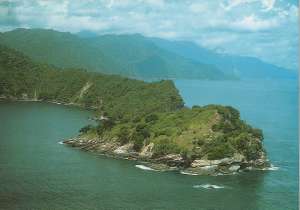
Peninsula of Paria
Later, he headed to Santo Domingo, passing by the Gulf of Paria and sailing along the Venezuelan Coast, bordering Margarita Island, where he saw pearls for the first time.
3. The Conquest
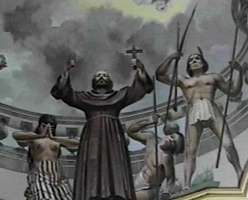
Fresco of the Municipal Council of Caracas
The Conquest, which lasted until half the XVII century was bound to be the next episode. Two main objectives drove the Spaniards to conquer the world they had just discovered. One of religious nature was to evangelize the aborigines. The other one of mercantile character, was the exploitation of gold, silver, pearls, precious stones and many other similar resources they had found in the new continent.
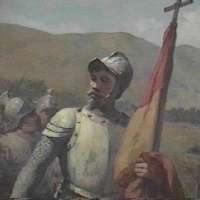
Diego de Losada
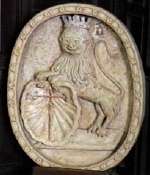
Ancient shield of the city of CaracasCaracas, today Venezuela's capital was founded in 1567 by Diego de Losada after subduing the brave and fearless tribes of the region, commanded by their courageous "caciques" (chiefs) as Guaicaipuro, Naiguata, Tamanaco.
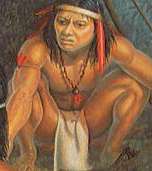
They heroically defended their people, natural habitat and the right to live in their homeland according to the laws and believe they had inherited through ages from their ancestors. They fought daringly against the invaders that not only outnumbered them but were equipped with far more sophisticated weapons.
4. The Colony
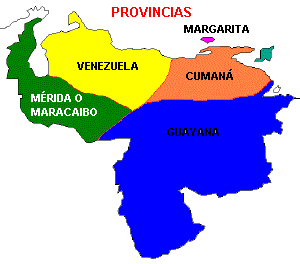
Contrary to Mexico and Peru, which produced huge amounts of silver and gold, Venezuela's production was cocoa, which by the time was economically irrelevant to the Spanish Crown. This fact made the six provinces (Venezuela, Cumana, Merida, Guayana, Margarita and Trinidad) politically dependable, first on the Viceroy-ship of Santo Domingo and later on the Viceroy-ship of Santa Fe de Bogotá.
Since 1620 onwards cocoa became the main Venezuelan product and remained so for the next two centuries, attracting a great number of Spanish immigrants, particularly from the Canary Islands.
As the need of laborers increased, slaves from Africa began to be brought. They not only became the main factor in the development of cocoa, sugar, cotton, coffee and tobacco farming but, also a very important social one as their traditions, myths, songs and rhythms would become a relevant and ever present ingredient in the Venezuelan culture.
To regulate and control the whole trading of this flourishing agricultural commerce the Spanish Crown created the "Real Compañia Guipuzcoana de Caracas". Its intervention in the economic and political scene caused unease in all sector of the population, thus engendering the propitious atmosphere for the early independence movement.
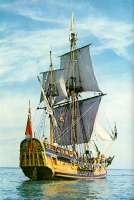
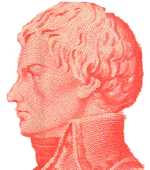
Francisco de Miranda
Francisco de Miranda led the most significant pre-independence movement. Miranda, who has served in the Spanish army, participated in the independence war of the United States and actively fought in the French Revolution, believed that Venezuelan and American independence would be achieved amid the political game of the dominating European nations (England, France, Spain) together with the support of the United States. However all his attempts to start the independence process found no echo among the Venezuelans. Altogether defeated Miranda quit the scene and left for England.