Guías de Viaje




Bolívar City
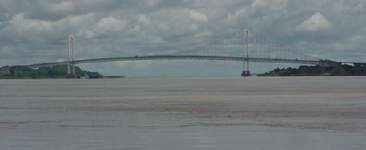
Angostura bridge over the Orinoco river
Ciudad Bolivar is one of the Venezuelan cities that keep more history on its streets, squares and museums. Formerly named Angostura because of its location on the narrowest part of the majestic Orinoco. Site of many independence battles and one of the first regions in the country to be freed from the Spanish bondage; it was declared interim capital of the newly formed republic in 1818 by the Liberator Simon Bolivar. From here, a year later Bolivar addressed the country his famous "Discurso de Angostura" (Angostura's Speech), in which he gave up all the special powers The Congress had granted him and laid out the new republic paradigm.
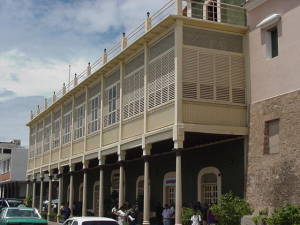
Colonial house on the Orinoco walk
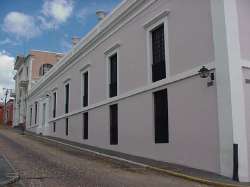
Angostura congress house
A place worthy of being visited is La Casa de San Isidro (San Isidro's House), property of the Cornieles family, often visited by the Liberator and where he wrote the Angostura's Speech. Presently transformed into a museum where you can glance at the colonial lifestyle and admire the gorgeous surrounding gardens.
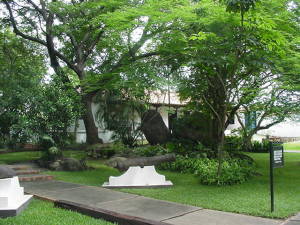
Gardens at San Isidro house
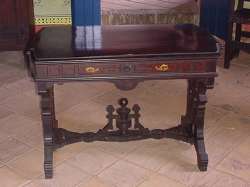
Reproduction of the desk used by Simon Bolivar to prepare his speech at the Angostura congress
It was also in Ciudad Bolivar where the first Venezuelan newspaper El Correo del Orinoco was printed. The newspaper house is today Bolivar Museum. Among its exhibits you can see the press used to first print the Correo del Orinoco and works of many Venezuelan artists such as Tito Salas, Lopez Mendez, Marisol Escobar, Alejandro Otero, Cruz Diez, Alirio Palacios and Hector Poleo among others. There also are objects of Pre-Colombian art and some petroglyphs.
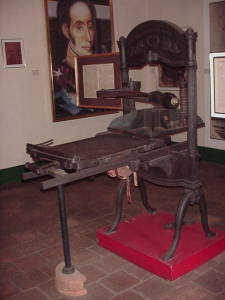
Correo del Orinoco
Original press
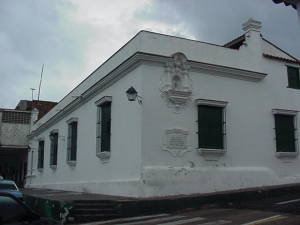
Correo del Orinoco - Today Bolivar museum
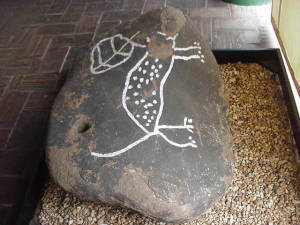
Petroglyph
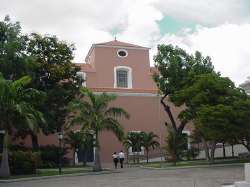
Cathedral - Wall where Piar was executed
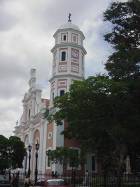
Cathedral Facade
A most attracting place in the city is the Bolivar Square surrounded by The Angostura Congress House, The Cathedral with its peculiar salmon color, The Piar House where Manuel Piar was kept prisoner before being executed, The Parish House and the colonial Governor's House today's Town Hall.
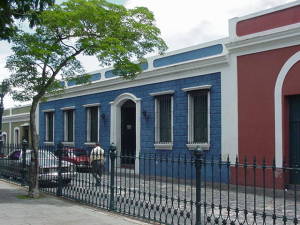
Piar house
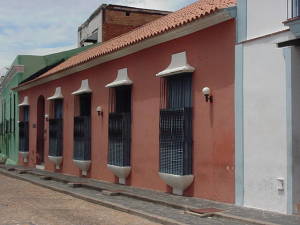
Parish house
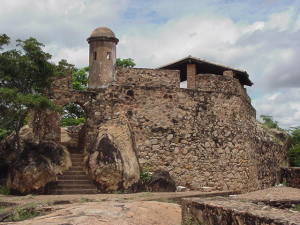
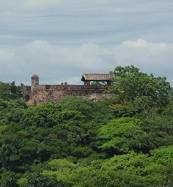
Another historic monument is El Fortin Zamuro (The Zamuro Fortress) which played a decisive role in the victory of Ciudad Bolivar, where the independence revolution was definitely consolidated in 1903.
One of the prettiest sights Ciudad Bolivar offers is the Angostura Bridge over the Orinoco River. The bridge links Bolivar State to the rest of the country. One of the river islands, called by Humboldt The Orinocometro is used to measure the water level. In the picture shown here, which was taken during the rainy season, the island ground shows a low level above the river. During the dry season the island ground may reach 18 meters over the river waters.
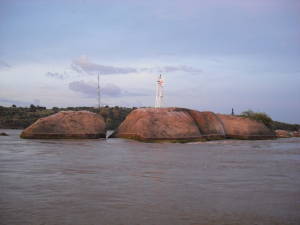
Orinocometro
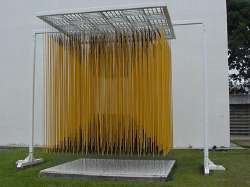
The Jesus Soto Modern Art museum is one of the marvels Ciudad Bolivar possesses that New York, Paris or any other great metropolis would proudly count among its treasures. The city named the museum after its illustrious son the plastic artist Jesus Soto. This museum founded in 1972 has eight rooms and several inner gardens aesthetically adorned with fine works of sculpture. If you are an art lover this visit is a must; if not, you might as well relish the exquisite atmosphere of the place.
For those keen on Geology, La Universidad de Oriente (The University of the West), offers the Geologic and Mining Museum in whose rooms rocks and minerals from Guayana and the rest of the country are exhibited. You can also see a scale model of El Cerro Bolivar (Bolivar Mountain) from where iron mineral is extracted. Some ancillary equipment used in the past for the iron exploitation is exhibited too.
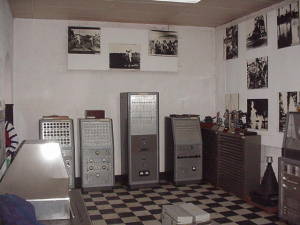
Ancillary equipment exhibited at the museum
Venezuelan Guayana destinations:
Guayana | Canaima | La Gran Sabana | Ciudad Bolivar | Ciudad Guayana | Guri | Jesus Soto museum
Ver además
| Chacaito Gully - There are to ways to get to the Chacaito Gully: From the Park Rangers Place Chacaito or from Sabas Nieves. The best option is to get from one point and leave by the other. In this narration we start from Chacaito. |
| Sancocho de Sapoara - La Sapoara es un pescado que abunda en las adyacencia de los ríos Orinoco y Caroní, es famosa en Ciudad Bolívar y en general en todas las zonas ribereñas del río Orinoco. Se dice que si usted va a Ciudad Bolívar y no come Sapoara no conoce realmente la ci |
| Manuel Piar - General en Jefe de los ejércitos de Venezuela en la Guerra de Independencia. Pese a su hondo sentido patriota, en alguna medida representó el resentimiento que sentía la casta de los "pardos" (a la cual pertenecía) por la sociedad mantuana; lo cual alcanz |
| El Discurso de Angostura - Discurso pronunciado por Simón Bolívar el 15 de febrero de 1819, en la provincia de Guayana, con motivo de la instalación del segundo Congreso Constituyente de la República de Venezuela en San Tomé de Angostura (hoy Ciudad Bolívar). |
| Indian Cave - One of the interesting features of Morrocoy Nacional Park is to visit the Indian Caves, called that way by being caves with petroglyphs made by the natives. This caves can be found inside the Reserva Natural Cuare (Cuare Natural Reserve) |


Fin Espacio Publicitario